

What is the effect of nonionic dispersing agents on the abrasion resistance of coatings?
Oct 06, 2025
Hey there! As a supplier of nonionic dispersing agents, I've been getting a lot of questions lately about how these little wonders impact the abrasion resistance of coatings. So, I thought I'd take a deep dive into this topic and share some insights with you all.
First off, let's understand what nonionic dispersing agents are. Nonionic dispersing agents are a type of surfactant that don't carry an electrical charge. They're super useful in coatings because they help to break down and disperse solid particles evenly throughout the liquid medium. This even distribution is crucial for the overall performance of the coating, including its abrasion resistance.
Now, let's talk about abrasion resistance. In simple terms, abrasion resistance is a coating's ability to withstand wear and tear caused by friction, scraping, or rubbing. Whether it's a floor coating that has to endure foot traffic or a car paint that's constantly exposed to road debris, a high level of abrasion resistance is essential for a long - lasting and good - looking finish.
So, how do nonionic dispersing agents affect the abrasion resistance of coatings? Well, one of the key ways is through particle dispersion. When you add a nonionic dispersing agent to a coating formulation, it reduces the surface tension between the solid particles and the liquid. This allows the particles to separate from each other and spread out more evenly.
Think of it like trying to mix oil and water. Without an emulsifier (which is kind of like a dispersing agent), the oil will clump together and form big droplets. But when you add an emulsifier, the oil droplets break up and disperse evenly throughout the water. The same principle applies to coatings. When the solid particles in a coating are well - dispersed, they form a more uniform and dense film when the coating dries. This dense film is better able to resist abrasion because there are no weak spots or gaps where the abrasive forces can easily penetrate.
Another important aspect is the interaction between the nonionic dispersing agent and the binder in the coating. The binder is the component that holds the solid particles together and adheres the coating to the substrate. Nonionic dispersing agents can improve the compatibility between the binder and the solid particles. They can help the binder to wet the particles more effectively, which in turn enhances the adhesion of the coating to the substrate. A coating that adheres well to the substrate is less likely to be worn away by abrasion.
Let's take a look at some specific types of nonionic dispersing agents. One popular type is the Ethoxylated Propoxylated 2 4 7 9 Tetramethyl 5 Decyne 4 7 Diol. This type of nonionic dispersing agent has excellent wetting and dispersing properties. It can quickly spread over the surface of the solid particles, reducing the agglomeration and ensuring a more homogeneous dispersion. This results in a coating with improved abrasion resistance.
Gemini Surfactant is another interesting option. Gemini surfactants are a special class of nonionic dispersing agents that have two hydrophilic heads and two hydrophobic tails. This unique structure gives them enhanced surface - active properties. They can form strong bonds with the solid particles and the binder, which not only improves the dispersion but also strengthens the overall structure of the coating. As a result, the coating becomes more resistant to abrasion.

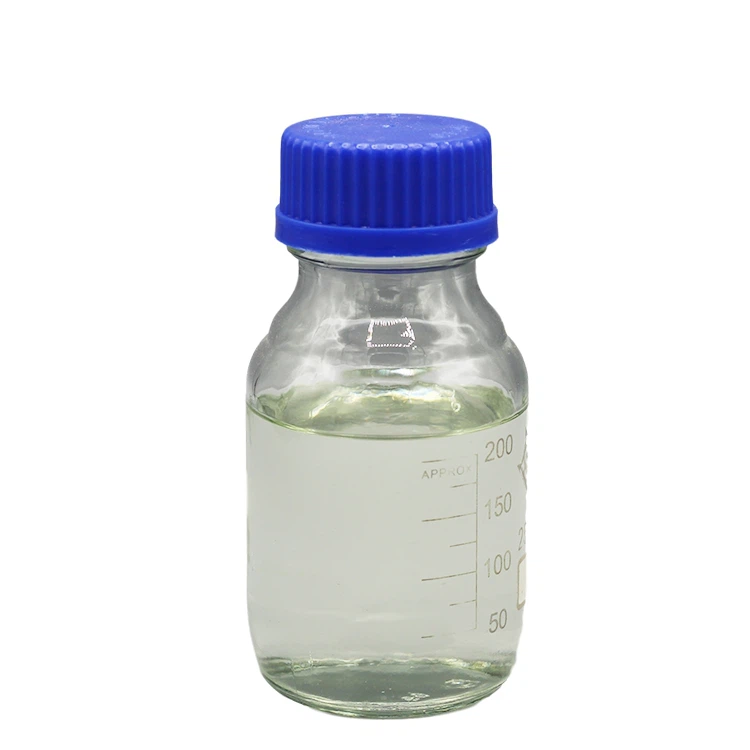
Wetting and Dispersing Agent is a general term for a group of nonionic dispersing agents that are designed to improve the wetting and dispersion of pigments and fillers in coatings. These agents can reduce the viscosity of the coating formulation, making it easier to apply. At the same time, they ensure that the pigments and fillers are evenly distributed, which is crucial for the abrasion resistance of the final coating.
In addition to particle dispersion and binder interaction, nonionic dispersing agents can also affect the surface properties of the coating. They can reduce the surface energy of the coating, making it smoother and more slippery. A smooth and slippery surface is less likely to catch on abrasive materials, which means less wear and tear. For example, a coating with a low surface energy will be less likely to pick up dirt and debris, which can act as abrasives and damage the coating over time.
However, it's important to note that the amount of nonionic dispersing agent used in a coating formulation matters. Using too little may not achieve the desired level of dispersion, while using too much can have negative effects. For instance, an excessive amount of dispersing agent can lead to foam formation during the coating process. Foam can create voids in the coating film, which weakens the structure and reduces the abrasion resistance.
So, how do you determine the right amount of nonionic dispersing agent? Well, it depends on several factors, such as the type of coating, the size and type of solid particles, and the desired properties of the final coating. Usually, some trial - and - error testing is required. You can start with a recommended dosage provided by the dispersing agent manufacturer and then adjust it based on the results of your tests.
In conclusion, nonionic dispersing agents play a crucial role in enhancing the abrasion resistance of coatings. They improve particle dispersion, strengthen the binder - particle interaction, and modify the surface properties of the coating. If you're in the business of coating production, considering the use of high - quality nonionic dispersing agents can significantly improve the performance and durability of your coatings.
If you're interested in learning more about our nonionic dispersing agents or want to discuss how they can be incorporated into your coating formulations, I'd love to have a chat with you. Feel free to reach out to us for a detailed discussion on your specific needs. We're here to help you create coatings that not only look great but also stand the test of time.
References
- "Surfactants in Coatings" by some coating experts.
- "Principles of Coating Technology" which provides in - depth knowledge about coating components and their interactions.
- Research papers on the application of nonionic dispersing agents in different types of coatings.