

Can low foam wetting agents be used in the marine industry?
Jun 10, 2025
Can low foam wetting agents be used in the marine industry? This is a question that has intrigued many in the field. As a supplier of Low Foam Wetting Agent, I am excited to explore this topic in depth and share my insights.
The Marine Industry's Unique Requirements
The marine industry operates in a harsh and demanding environment. Vessels are constantly exposed to saltwater, extreme weather conditions, and mechanical stresses. Coatings, paints, and other protective materials used in this industry need to perform at their best to ensure the longevity and safety of the vessels.
One of the key challenges in the marine industry is achieving proper wetting of substrates. Whether it's applying anti - fouling coatings to the hull to prevent the growth of marine organisms or using corrosion - resistant paints on the superstructure, the wetting agent plays a crucial role. Good wetting ensures that the coating adheres evenly to the surface, providing better protection and performance. However, traditional wetting agents often generate a significant amount of foam, which can be a major drawback in the marine context.
Why Low Foam is Essential in the Marine Industry
Foam can cause a multitude of problems in the marine coating application process. During the spraying or brushing of coatings, excessive foam can lead to uneven application. This unevenness can result in thin spots in the coating, leaving the substrate vulnerable to corrosion and fouling. Moreover, foam can trap air bubbles within the coating, weakening its structure and reducing its protective capabilities.
In the marine industry, where coatings need to withstand high - pressure water flow, waves, and saltwater immersion, a well - adhered and bubble - free coating is essential. Low foam wetting agents address these issues by minimizing foam generation during the application process. This allows for a more uniform coating layer, which in turn enhances the durability and effectiveness of the coating.
Properties of Low Foam Wetting Agents
Low foam wetting agents are designed to reduce surface tension and improve the wetting ability of liquids on various substrates, while keeping foam formation to a minimum. They are typically formulated with specific chemical structures that prevent the formation of stable foam bubbles.
Non - ionic Wetting Agents are a common type of low foam wetting agents. Non - ionic wetting agents do not dissociate into ions in solution, which gives them several advantages. They are often more compatible with a wide range of coating formulations, including water - based and solvent - based systems. This compatibility makes them suitable for different types of marine coatings, such as epoxy, polyurethane, and acrylic coatings.
Another important property of low foam wetting agents is their ability to work under different conditions. In the marine environment, coatings may be applied at different temperatures and humidity levels. Low foam wetting agents can maintain their wetting performance across a broad range of environmental conditions, ensuring consistent coating quality.
Applications of Low Foam Wetting Agents in the Marine Industry
Anti - fouling Coatings
Anti - fouling coatings are used to prevent the attachment and growth of marine organisms on the hull of vessels. These coatings need to be applied evenly to create a smooth surface that resists fouling. Low foam wetting agents help in achieving this by ensuring proper wetting of the hull surface. They allow the anti - fouling coating to spread uniformly, providing complete coverage and better protection against barnacles, algae, and other marine organisms.
Corrosion - Resistant Coatings
Corrosion is a major concern in the marine industry, as saltwater is highly corrosive to metals. Corrosion - resistant coatings are used to protect the metal components of vessels, such as the hull, decks, and machinery. Low foam wetting agents improve the adhesion of these coatings to the metal surface, preventing the penetration of saltwater and oxygen, which are the main causes of corrosion.
Deck and Superstructure Coatings
The decks and superstructures of vessels are exposed to various environmental factors, including sunlight, rain, and mechanical wear. Coatings for these areas need to be durable and aesthetically pleasing. Low foam wetting agents ensure that these coatings are applied smoothly, enhancing their appearance and providing long - lasting protection.
Compatibility with Marine Coatings and Substrates
One of the advantages of low foam wetting agents is their compatibility with different types of marine coatings and substrates. They can be used with both water - based and solvent - based coatings, which is important as the marine industry is gradually shifting towards more environmentally friendly water - based coatings.
Low foam wetting agents also work well on a variety of substrates commonly found in the marine industry, such as steel, aluminum, fiberglass, and composite materials. They can effectively reduce the surface tension of the coating on these substrates, improving wetting and adhesion. This wide compatibility makes low foam wetting agents a versatile choice for marine coating applications.
Case Studies: Success Stories of Low Foam Wetting Agents in the Marine Industry
There have been numerous successful applications of low foam wetting agents in the marine industry. For example, a large shipping company was experiencing issues with uneven coating on their vessel hulls. The traditional wetting agents they were using were generating excessive foam, leading to poor coating quality and frequent corrosion problems. After switching to a low foam wetting agent from our product range, they noticed a significant improvement in the coating application process. The coating was applied more evenly, and the vessels showed better resistance to corrosion and fouling over time.
Another case involved a yacht manufacturer. They were looking for a way to improve the finish of their yacht coatings. By using our low foam wetting agent in their coating formulations, they were able to achieve a smoother and more professional - looking finish. The reduced foam also made the coating process more efficient, saving time and resources.
Future Outlook for Low Foam Wetting Agents in the Marine Industry
As the marine industry continues to evolve, the demand for high - performance coatings will only increase. Low foam wetting agents are likely to play an even more important role in the future. With the growing emphasis on environmental protection, the development of more eco - friendly low foam wetting agents is expected. These agents will not only meet the performance requirements of the marine industry but also comply with stricter environmental regulations.
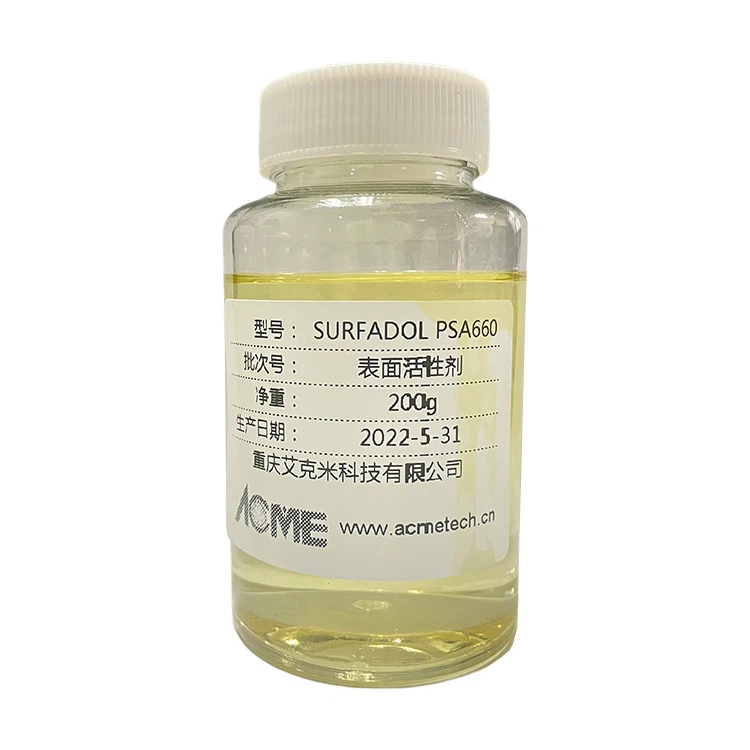

In addition, as new materials and coating technologies emerge in the marine field, low foam wetting agents will need to be further optimized to ensure compatibility and performance. Research and development efforts will focus on improving the wetting ability, foam control, and overall efficiency of these agents.
Contact for Procurement and Consultation
If you are in the marine industry and are interested in exploring the benefits of low foam wetting agents for your coating applications, I encourage you to reach out. Our company offers a wide range of Low Foam Wetting Agent products that are specifically designed to meet the unique requirements of the marine sector. We can provide samples for testing and offer technical support to ensure that you get the best results for your coating projects. Whether you are a coating manufacturer, a shipbuilder, or a maintenance service provider, we are here to assist you in enhancing the performance of your coatings.
References
- "Marine Coatings: Principles, Technology, and Applications" by John Wiley & Sons.
- "Surface Chemistry in Coatings Technology" edited by Paul F. Luckham and William A. Plueddemann.
- Industry reports on the use of wetting agents in the marine industry from various research institutions.