

ACME:Your Professional Additives for Different Uses Manufacturer!
Founded by Mr. John Sun in September 2004, Chongqing ACME Tech. Co., Ltd. (ACME) has been focusing on R&D, production and sales of acetylenic diols based additives.
At ACME, we enable manufacturers to convert solvent-borne systems to waterborne formulations that meet demanding industry regulations. We offer a growing line of APEO-free, low-VOC additives that meet the most challenging sustainability and performance requirements facing the industry today.
-

Chemical equivalent of Surfynnol 420, good low-foam wetting agent for water based coatings and inks.
Add to Inquiry -
-
Nonionic Polyurethane Associative Thickener SURFADIOLS RM-8
Alternative to ACRYSOL RM-8
Add to Inquiry -
-
-
SURFADIOLS 190 (Alternative To BYK-190 And TEGO-750W)
Alternative to BYK-190 and TEGO-750W
Add to Inquiry -
-
-
-
High-molecular-weight Dispersing Agent SURFADIOLS 103
Alternative to EFKA PU 4010 and DISPERBYK 103
Add to Inquiry -
Anti-Floating and Anti-Flooding Dispersing Agent SURFADIOLS P-104S
Alternative to BYK P 104S
Add to Inquiry -


Why Choose Us
Rich Product Range
We mainly produce wood coating additives, anti-mildew coating additives, wood coating additives, paints containing antibacterial additives, wood and furniture coating additives, industrial wood coating additives and so on.
Wide Range Of Uses
The products produced by our company can be widely used in the coating industry, paint and coating applications, paper and pulp industry, detergent and cleaning agent manufacturing, food processing, pharmaceutical industry and chemical production.
Quality Guaranteed
The products produced by our company have obtained ISO 9001, ISO 14001 and ISO 45001 certificates; REACH certificate, and all our products have been sold to more than 50 countries and regions.
Leading Service
We have many years of industry experience and a complete production management, quality supervision, sales service operation system. Whether you want to buy wood coating additives or industrial coating additives, just send your requirements via email and we can customize the product for you. We also accept OEM customization.
Types of Additives for Different Uses
The Additives for Different Uses produced by our company mainly include the following types:
Low Foam Wetting Agent
Low foam wetting agents are surfactants designed to reduce the surface tension of a liquid, allowing it to spread more easily across a surface. Unlike traditional wetting agents that may generate excessive foam, low foam variants are engineered to minimize foam formation. This characteristic is crucial in many industrial processes where foam can impede operations, cause equipment damage, or lead to inefficiencies.
|
Appearance |
Light yellow liquid |
|
APHA Color (Pt-Co) |
≤350 |
|
Active matter |
2,4,7,9-Tetramethyl-5-decyne-4,7-diol ethoxylate |
|
Active matter content |
80% |
|
Density at 25°C, g/cm3 |
1.000-1.100 |
|
Viscosity at 25°C |
≤300 mPa.s |
|
Dynamic surface tension (0. 1%wt. , 6b/s) |
30.0 dynes/cm |
|
Solubility in water |
Soluble |
|
Suggested use level |
0.1%–1.0% of total formulation weight |
|
Package and packing |
200kg plastic drums, 4 drums per pallet; 25kg pails for trial, 18 pails per pallet; 1000kg IBC totes. |
|
Shelf life |
24 months from the date of manufacture |
|
Storage instructions |
Keep containers tightly closed in a dry, cool, and well-ventilated place. Product is normally freeze-thaw stable; if it phase separates or freezes at colder temperatures, warm container to 40°C and mix thoroughly before use. The suggested storage temperature is 4°C~50°C. |
|
Free sample for lab test |
Up to 200g free sample can be sent by FedEx upon request |
Solvent Free Defoamer
A Solvent Free Defoamer is exactly what it sounds like - a defoaming agent that doesn't contain any solvents. This makes them an environmentally friendly option, which is becoming increasingly important in today's market. They work by reducing the surface tension of the liquid, which prevents the formation of foam and breaks down existing foam bubbles.
|
Active matter |
Acetylenic Diols |
|
Active matter content |
100% |
|
Solubility in water |
Slightly soluble |
|
Suggested use level |
0.2% - 2.0% of total formulation weight |
|
Test Item |
Standard |
|
Appearance |
Clear yellow liquid |
|
APHA Color (Pt-Co) |
≤350 |
|
Density at 25°C, g/cm3 |
0.900-1.000 |
Surface Tension Reduction
One of the most important functions of a wetting agent is to reduce the surface tension of a liquid. Both low foam wetting agents and traditional wetting agents are effective at doing this, but low foam wetting agents often do it more efficiently. They can achieve the same level of surface tension reduction with a lower concentration of the additive, which means you can save money on materials.
Efficiency Improvement
One of the primary benefits of using low foam wetting agents is the improvement in process efficiency. By reducing foam, these agents eliminate the need for additional defoaming agents, which can save time and money.
Environmental Friendliness
Many low foam wetting agents are environmentally friendly, as they are biodegradable and have low toxicity. This is particularly important in the energy industry, where environmental regulations are becoming increasingly strict. Using these agents can help energy companies meet environmental standards and reduce their environmental impact.
Compatibility
Low foam wetting agents are generally more compatible with other chemicals and additives than traditional wetting agents. This means they can be used in a wider range of formulations without causing any issues. For example, they can be used in combination with emulsifiers and anti-foaming agents to create a more effective product.
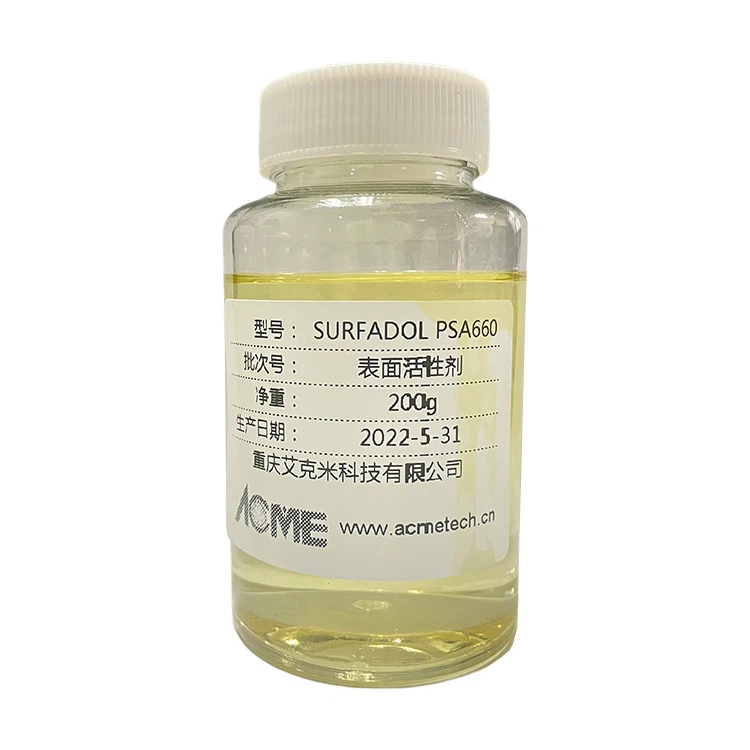
Application of Low Foam Wetting Agent
In agriculture, low foam wetting agents are used to improve the efficiency of pesticides and fertilizers. They help these chemicals spread evenly over the leaves and soil, which means they can be more effective at controlling pests and promoting plant growth.
In the paints and coatings industry, low foam wetting agents are used to improve the flow and leveling of the paint. They help the paint spread evenly over the surface, which results in a smoother and more professional-looking finish.
In cleaning products, low foam wetting agents are used to reduce the surface tension of the cleaning solution, which helps it penetrate dirt and grime more effectively. They also help the cleaning solution rinse off easily, which means there's less residue left behind.
In oil and gas exploration, low foam wetting agents play a vital role in drilling fluids. Drilling fluids are used to lubricate the drill bit, carry cuttings to the surface, and maintain wellbore stability. Foam in drilling fluids can cause problems such as reduced pump efficiency, inaccurate measurement of fluid properties, and difficulties in cuttings removal. Low foam wetting agents help to control foam while improving the wetting properties of the fluid, allowing it to spread evenly over the rock surface and enhance the efficiency of the drilling process.
In power plants, low foam wetting agents are used in cooling water systems. Cooling water is used to remove heat from the power generation equipment, and foam in the cooling water can reduce the heat transfer efficiency. Low foam wetting agents help to control foam and improve the wetting of the heat transfer surfaces, ensuring efficient heat exchange. They also prevent the formation of scale and corrosion on the equipment, which can lead to reduced performance and increased maintenance costs.
Coatings:
Solvent-free defoamers are crucial in waterborne, high-build, and fast-drying coating systems, improving air release and preventing microfoam. They are also used in radiation-curable systems like wood and industrial coatings, printing inks, and adhesives.
Adhesives:
They are effective in both solvent-based and solvent-free adhesive formulations, enhancing application properties and preventing foam-related issues.
Inks:
Solvent-free defoamers are used in various ink systems, including silk screen, UV curing, and other solvent-based and solvent-free inks, to eliminate microbubbles and surface foam.
Advantages of Solvent Free Defoamer
Environmental Benefits
Solvent-free defoamers are environmentally friendly. Solvents can be harmful to the environment and human health, as they can release volatile organic compounds (VOCs) into the air. By using a solvent-free defoamer, you can reduce your carbon footprint and comply with environmental regulations.
01
Compatibility
Solvent-free defoamers are generally compatible with a wide range of paint formulations. Whether you're working with water-based, solvent-based, or powder coatings, there's likely a solvent-free defoamer that will work for you. This means you can use the same defoamer across different paint products, which can simplify your supply chain and reduce costs.
02
Performance
Solvent-free defoamers can provide excellent defoaming performance in paint applications. They can quickly break down foam bubbles and prevent new foam from forming, even in high-shear mixing conditions. This ensures a smooth and even paint application, with no visible bubbles or pinholes.
03
Stability
Another advantage of solvent-free defoamers is their stability. They can maintain their defoaming performance over time, even in harsh storage conditions. This means you can store your paint for longer periods without worrying about foam formation.
04
Cost-Effectiveness
While solvent-free defoamers may have a slightly higher upfront cost compared to traditional defoamers, they can actually be more cost-effective in the long run. By reducing foam-related problems, you can save time and money on rework and touch-ups. You can also improve the efficiency of your painting process, which can lead to increased productivity and profitability.
05
Package
The standard package for this material is 180kg plastic drums, 4 drums/pallet.
The product is also available in IBCs and 20kg pails.

FAQ
Additives for Different Uses - Chongqing ACME Tech. Co., Ltd.
car paint drying additives, vehicle paint durability additives, automotive paint drying additives