

ACME:Your Professional Additives By CAS Numbers Manufacturer!
Founded by Mr. John Sun in September 2004, Chongqing ACME Tech. Co., Ltd. (ACME) has been focusing on R&D, production and sales of acetylenic diols based additives.
At ACME, we enable manufacturers to convert solvent-borne systems to waterborne formulations that meet demanding industry regulations. We offer a growing line of APEO-free, low-VOC additives that meet the most challenging sustainability and performance requirements facing the industry today.
-

2 4 7 9 Tetramethyl 5 Decyne 4 7 Diol
Surfadol 541 is a highly efficient wetting and defoaming agent.. Quickly surface tension reduction
Add to Inquiry -
Surfadol 541 a gemini wetting agent and molecular defoamer. This 100% active wax which does not
Add to Inquiry -
Surfadol 541S is a nonionic surfactant that has multifunctional benefits, including wetting and
Add to Inquiry -
Keyword: Surfadol 541A. Product Introduction: Surfadol 541S is a Static and dynamic wetting agent
Add to Inquiry -
Keyword: Surfadol 541BC. Product Introduction: Surfadol 541BC S is a non-silicone, non-oil,
Add to Inquiry -
Keyword: Surfadol 541DPM. Product Introduction: Surfadol 541DPM is a multifunctional surfactant
Add to Inquiry -
Keyword: Surfadol 541E. Product Introduction: APEOs (alkylphenol ethoxylates) are toxic to aquatic
Add to Inquiry -
Keyword: Surfadol 541H. Product Introduction: Foam is created when gas is introduced and trapped
Add to Inquiry -
Keyword: Surfadol 541DPM. Product Introduction: Surfadol 541DPM is a nonionic surfactant that has
Add to Inquiry -
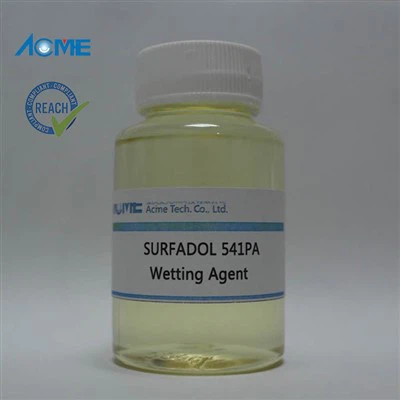
Keyword: Surfadol 541PA. Product Introduction: Surfadol 541PA: 50% active solution of Surfynol 104
Add to Inquiry -
Keyword: Surfadol 541PG. Product Introduction: Defoamers and deaerators are indispensable additives
Add to Inquiry -
Ethoxylated-2 4 7 9-tetramethyl-5-decyne-4 7-diol
Keyword: Surfadol 420. Product Introduction: 1. Surfadol 420 is a multifunctional surfactant
Add to Inquiry




Why Choose Us
Rich Product Range
We mainly produce wood coating additives, anti-mildew coating additives, wood coating additives, paints containing antibacterial additives, wood and furniture coating additives, industrial wood coating additives and so on.
Wide Range Of Uses
The products produced by our company can be widely used in the coating industry, paint and coating applications, paper and pulp industry, detergent and cleaning agent manufacturing, food processing, pharmaceutical industry and chemical production.
Quality Guaranteed
The products produced by our company have obtained ISO 9001, ISO 14001 and ISO 45001 certificates; REACH certificate, and all our products have been sold to more than 50 countries and regions.
Leading Service
We have many years of industry experience and a complete production management, quality supervision, sales service operation system. Whether you want to buy wood coating additives or industrial coating additives, just send your requirements via email and we can customize the product for you. We also accept OEM customization.
Types of Additives By CAS Numbers
The Additives By CAS Numbers produced by our company mainly include the following types:
Powder Defoamer
Surfadol 541S is a nonionic surfactant that has multifunctional benefits, including wetting and foam control, in aqueous systems.
|
Product name |
Powder defoamer |
|
Keyword |
Surfadol 541S |
|
Product Introduction |
Surfadol 541S is a nonionic surfactant that has multifunctional benefits, including wetting and foam control, in aqueous systems. |
|
Properties |
✓ Surfadol 541S has very low static and dynamic surface tension |
|
Application |
✓ WB adhesives |
|
Chemical description |
Acetylenic diols |
|
Appearance |
White powder |
|
Active matter content |
42.5% |
|
APHA Color (Pt-Co) |
≤350 |
Nonionic Dispersing
Surfadol 332 is a low-foaming pigment grind aid designed for use in aqueous systems. Surfadol 332 designed as pigment wetting and be used in aqueous formulations.
|
Chemical description |
2,4,7,9-Tetramethyl-5-decyne-4,7-diol and Alcohol Ethoxylates |
|
Appearance |
Light yellow liquid |
|
Active matter content |
80% |
|
APHA Color (Pt-Co) |
≤350 |
|
We recommend adding |
0.1-1%, And the application process needs to be stirred at high speed for 30 minutes |
Efficient Defoaming Action: Powder defoamers are designed to quickly and effectively eliminate foam in various industrial processes, including in aqueous systems, paints, coatings, adhesives, and chemical processing.
Versatility: Powder defoamers can be used in both aqueous and non-aqueous systems and are compatible with a wide range of chemicals and formulations.
Ease of Handling: The powdered form of defoamer offers advantages in terms of handling, storage, and transportation compared to liquid defoamers. It is easier to store and handle powdered defoamers without the risk of spillage or leakage.
Long Shelf Life: Powder defoamers typically have a longer shelf life compared to liquid defoamers, as they are less prone to degradation over time.
Low Dosage Requirement: Powder defoamers are effective at low concentrations, making them cost-effective and economical to use in industrial processes.

Application of Powder Defoamer
Building materials industry
Eliminate entrained bubbles in dry-mixed mortar, tile adhesive, and floor mortar to improve density and strength.
Daily chemical industry
Suppress foam in laundry detergent and automatic dishwashing powder to prevent machine foam overflow.
Food processing
Used for defoaming in the processing of protein powder and milk powder to improve the uniformity of spray drying or mixing.
Agricultural fertilizer
Adding powdered defoamer to granular fertilizer can reduce mixed foam and prevent clogging.
Plastic and rubber additives
Adding to plastic modification can prevent foam interference during granulation or mixing.
Water treatment agent
Prevent foam accumulation when certain sewage treatment agents are mixed with dry powder PAM.
Advantages of Nonionic Dispersing
One of the key advantages of nonionic dispersing agent is their compatibility with a wide range of other chemicals. They can be used in combination with ionic surfactants, polymers, and other additives without causing unwanted chemical reactions. This makes them a versatile choice for various applications, including the electronics industry.
Nonionic dispersing agents exhibit excellent system stability due to their mechanism of action being independent of charge. They perform well even in the presence of acids, bases or salts and generate less foam, making them easier to use with defoamers.
Nonionic dispersing agents are generally considered to be more environmentally friendly than some ionic surfactants. They are often biodegradable and have lower toxicity levels.
Nonionic dispersing agents can significantly improve the performance of various electronic materials. By ensuring better dispersion of particles, they enhance the conductivity of conductive inks, the uniformity of solder pastes, and the quality of semiconductor and display devices. This leads to higher yields, fewer defects, and improved reliability of electronic products.
Application of Nonionic Dispersing
Paints and Coatings
Nonionic dispersing agents are used in paints and coatings to improve the dispersion of pigments and other additives. In this application, the agents are typically mixed with other chemicals and applied to a surface.
Inks
In the printing industry, nonionic dispersing agents are used to improve the flow and dispersion of inks. When handling inks containing these agents, it is important to wear gloves and avoid inhalation of the ink vapors.
Detergents
Nonionic dispersing agents are also used in detergents to improve their cleaning performance. When using detergents containing these agents, it is important to follow the instructions on the label. This may include wearing gloves and avoiding contact with eyes and skin.
Power Generation
In coal-fired power plants, coal is usually crushed into fine powder before being burned. Nonionic dispersing agents can be used to disperse coal particles in a water-based slurry before feeding it into the boiler. This helps improve combustion efficiency and reduce pollutant emissions.
Batteries
Nonionic dispersing agents can be used to disperse active materials in battery electrodes, ensuring better contact between particles, thereby improving the overall performance of the battery.
Semiconductor Manufacturing
In semiconductor manufacturing, nonionic dispersing agents are used in the process of chemical - mechanical planarization (CMP). CMP is a crucial step in the fabrication of semiconductor devices, where the surface of the wafer is polished to achieve a flat and smooth finish. Nonionic dispersing agents can be added to the CMP slurry to disperse the abrasive particles evenly. This helps to ensure uniform polishing across the wafer surface, reducing surface roughness and improving the overall quality of the semiconductor device.
Package
The standard package for this material is 180kg plastic drums, 4 drums/pallet.
The product is also available in IBCs and 20kg pails.

FAQ
Additives By CAS Numbers - Chongqing ACME Tech. Co., Ltd.
additives for stabilizers, additives for fillers, car coating additives