

Do water soluble wetting agents cause foaming problems?
Oct 20, 2025
Do water soluble wetting agents cause foaming problems?
Hey there! As a supplier of water soluble wetting agents, I often get asked this question. Foaming can be a real pain in the neck in many industrial and commercial applications. So, let's dig into whether water soluble wetting agents are the culprits behind those pesky foam issues.
First off, let's understand what water soluble wetting agents are. These agents are substances that reduce the surface tension of a liquid, allowing it to spread more easily across a surface. They're super useful in a whole bunch of industries, like printing, painting, and cleaning. For example, in the printing industry, they help the ink spread evenly on the paper. In cleaning products, they make the cleaner work better by allowing it to cover more surface area.
Now, the big question: do they cause foaming? Well, it's not a simple yes or no answer. Some water soluble wetting agents can indeed cause foaming, while others are designed to minimize it. It all boils down to the chemical composition of the wetting agent.
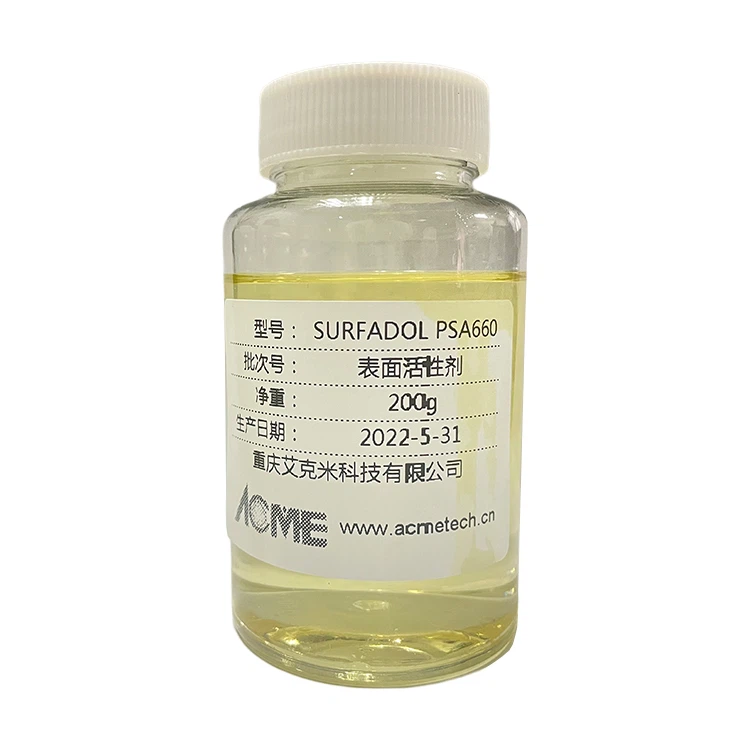

Certain types of wetting agents have molecules that have a natural tendency to form bubbles when they come into contact with air. These molecules can align themselves at the air - liquid interface, creating a stable film around the air bubbles, which leads to foaming. This can be a problem in applications where excessive foam can interfere with the process. For instance, in a printing press, too much foam in the fountain solution can cause uneven ink transfer, resulting in poor print quality.
On the flip side, many modern water soluble wetting agents are formulated to be low - foaming. These agents are engineered with specific chemical structures that reduce their ability to form stable bubbles. They still do their job of reducing surface tension but without creating a mountain of foam.
Let's talk about some of the factors that influence whether a wetting agent will cause foaming. The concentration of the wetting agent in the solution is a major one. If you use too high a concentration of a wetting agent that has a foaming tendency, you're more likely to end up with a foamy mess. It's like adding too much soap to your sink; you'll get a ton of bubbles.
The agitation level also plays a role. In processes where there's a lot of mechanical agitation, like in a high - speed mixing tank, even a low - foaming wetting agent might produce some foam. The movement of the liquid creates air bubbles, and if the wetting agent is present, it can stabilize those bubbles.
Temperature can also affect foaming. In general, higher temperatures can increase the foaming tendency of some wetting agents. This is because the increased thermal energy can make it easier for the wetting agent molecules to align at the air - liquid interface and form bubbles.
As a supplier, we understand the importance of providing the right wetting agents for different applications. That's why we offer a range of products to meet various needs. For those who are concerned about foaming, we have some great options.
One of our products is the Low - foam Wetting Agent for Fountain Solutions. This wetting agent is specifically designed for use in fountain solutions in the printing industry. It reduces surface tension effectively, ensuring good ink transfer, but it keeps the foam to a minimum. This means you can get high - quality prints without the headache of dealing with excessive foam.
Another product is the Wetting and Anti - foaming Agent. This is a dual - action product. It not only reduces surface tension like a regular wetting agent but also has anti - foaming properties. It's great for applications where you need both functions, like in some cleaning products or industrial processes where foam can cause problems.
We also have a Low Foam Wetting Agent. This agent is suitable for a wide range of applications. Whether you're in the paint industry, where foam can cause surface defects in the finished product, or in a chemical manufacturing process where foam can interfere with the reaction, this low - foam wetting agent can be a great solution.
So, if you're facing foaming problems in your process and you're using a water soluble wetting agent, don't just assume that the wetting agent is the bad guy. First, check the type of wetting agent you're using. If it's a high - foaming type, consider switching to one of our low - foaming products. You can also adjust the concentration of the wetting agent in your solution. Sometimes, a simple reduction in concentration can significantly reduce foaming without sacrificing the wetting performance.
If you're still not sure which wetting agent is right for your application, our team of experts is here to help. We can analyze your specific process requirements and recommend the best product for you.
In conclusion, while some water soluble wetting agents can cause foaming problems, there are plenty of options available to avoid this issue. We're committed to providing high - quality wetting agents that meet your needs without creating unnecessary foam. If you're interested in learning more or want to discuss your requirements, don't hesitate to reach out. We're eager to help you find the perfect wetting agent for your application and get your process running smoothly.
References
- "Surfactants in Solution" by M. J. Rosen. This book provides in - depth information about the properties of surfactants, including wetting agents and their foaming behavior.
- "Industrial Applications of Surfactants" edited by R. K. Prud'homme and S. A. Khan. It covers various industrial uses of surfactants and the challenges related to foaming in different processes.