

How can Gemini Surfactant be used in the textile industry?
Nov 27, 2025
Hey there! As a supplier of Gemini Surfactant, I'm super excited to chat with you about how this amazing stuff can be used in the textile industry. Gemini surfactants are a relatively new type of surfactant that have some really cool properties, and they're starting to make a big splash in the world of textiles.
What Are Gemini Surfactants?
Before we dive into how they're used in textiles, let's quickly go over what Gemini surfactants are. Regular surfactants are molecules that have a hydrophilic (water - loving) head and a hydrophobic (water - hating) tail. Gemini surfactants, on the other hand, are made up of two surfactant molecules connected by a spacer group. This unique structure gives them some pretty awesome properties compared to traditional surfactants.
They have a much lower critical micelle concentration (CMC), which means they can form micelles (tiny clusters of surfactant molecules) at lower concentrations. This leads to better surface activity, like lower surface tension and better wetting ability. They also have enhanced emulsifying, dispersing, and solubilizing properties, which are super useful in the textile industry.
Applications in the Textile Industry
Pretreatment Processes
One of the first steps in textile manufacturing is the pretreatment process. This includes desizing, scouring, and bleaching. Gemini surfactants can play a huge role here.
In desizing, which is the process of removing sizing agents from the fabric, Gemini surfactants can improve the wetting of the fabric. They can quickly penetrate the fabric structure, helping to break down and remove the sizing agents more effectively. Their high surface activity allows them to reduce the interfacial tension between the sizing agents and the fabric, making it easier to wash them away.
For scouring, which is used to remove impurities like oils, waxes, and dirt from the fabric, Gemini surfactants are great emulsifiers. They can form stable emulsions with the hydrophobic impurities, allowing them to be easily washed out with water. The enhanced dispersing properties also prevent the redeposition of these impurities back onto the fabric.
Bleaching is another important pretreatment step. Gemini surfactants can improve the bleaching efficiency. They help the bleaching agents to penetrate the fabric more evenly, resulting in a more uniform and effective bleaching process. They can also reduce the amount of bleaching agent needed, which is not only cost - effective but also more environmentally friendly.
Dyeing Processes
Dyeing is a crucial part of textile manufacturing, and Gemini surfactants can have a big impact here too.
In the dyeing bath, Gemini surfactants act as excellent dispersing agents. Many dyes, especially disperse dyes used for synthetic fibers, tend to aggregate in water. Gemini surfactants can prevent this aggregation by adsorbing onto the dye particles and keeping them well - dispersed. This ensures that the dye is evenly distributed in the dyeing bath, leading to more uniform dyeing of the fabric.
They also improve the wetting of the fabric during dyeing. By reducing the surface tension of the dyeing solution, they allow the dye to penetrate the fabric more easily. This results in better color fastness and a more intense color on the fabric.
For example, when using Ethoxylated Propoxylated 2 4 7 9 Tetramethyl 5 Decyne 4 7 Diol, which is a type of multifunctional additive related to Gemini - like properties, it can enhance the performance of the dyeing process. It can act as a Wetting and Dispersing Agent, ensuring that the dye is well - dispersed and the fabric is properly wetted.
Finishing Processes
The finishing process is what gives the fabric its final properties, like softness, water - repellency, or flame - retardancy. Gemini surfactants can be used in different ways here.
In softening finishes, they can improve the adsorption of softening agents onto the fabric. By reducing the surface tension of the softening solution, they help the softening agents to spread evenly on the fabric surface, resulting in a softer and more comfortable feel.
For water - repellent finishes, Gemini surfactants can be used as co - emulsifiers. They can help to form stable emulsions of water - repellent agents, which can then be applied to the fabric. Their high surface activity ensures that the water - repellent agents are well - distributed on the fabric, providing better water - repellency.
In flame - retardant finishes, Gemini surfactants can improve the adhesion of flame - retardant agents to the fabric. They can enhance the wetting of the fabric by the flame - retardant solution, allowing the agents to penetrate the fabric structure and bond more effectively.
Advantages of Using Gemini Surfactants in the Textile Industry
Cost - Effectiveness
Even though Gemini surfactants may seem a bit more expensive at first glance, they can actually save costs in the long run. Their lower CMC means that you need less of them to achieve the same or better results compared to traditional surfactants. In the pretreatment processes, they can reduce the amount of chemicals like sizing agents, bleaching agents, and scouring agents needed. In dyeing, they can improve the dye utilization rate, reducing the overall dye consumption. And in finishing, they can enhance the performance of the finishing agents, potentially reducing the amount of these agents required.
Environmental Benefits
The textile industry is known for being quite polluting, but Gemini surfactants can help to make it more environmentally friendly. Their ability to reduce the amount of chemicals used in various processes means less waste and fewer harmful emissions. For example, using less bleaching agent in the pretreatment process reduces the amount of chlorine - containing waste water. Their high biodegradability also means that they break down more easily in the environment compared to some traditional surfactants.
Improved Product Quality
As we've seen, Gemini surfactants can improve the quality of the textile products at every stage of the manufacturing process. In pretreatment, they ensure a cleaner and more uniform fabric surface. In dyeing, they result in more even and intense colors. And in finishing, they enhance the functional properties of the fabric, like softness, water - repellency, and flame - retardancy. This leads to higher - quality textile products that are more appealing to consumers.
Why Choose Our Gemini Surfactants?
As a supplier of Gemini surfactants, we offer high - quality products that are specifically designed for the textile industry. Our surfactants are carefully formulated to have the optimal properties for each application.
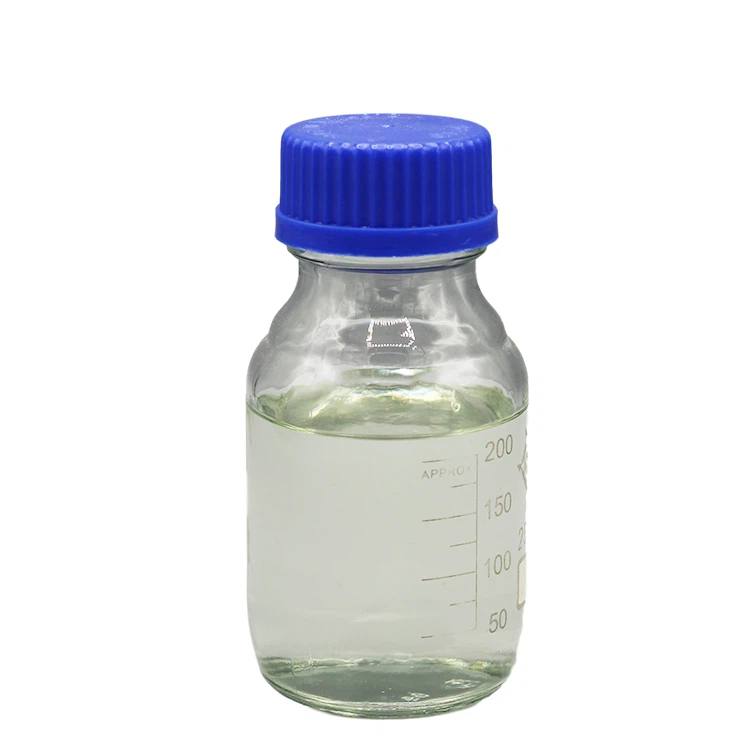

We have a team of experts who can provide technical support and advice. Whether you're having trouble with a particular dyeing process or need to optimize your finishing formulation, we're here to help. We can also customize our products to meet your specific requirements.
We understand the importance of reliability and consistency in the textile industry. That's why we have strict quality control measures in place to ensure that every batch of our Gemini surfactants meets the highest standards.
Contact Us for Purchasing
If you're interested in using Gemini surfactants in your textile manufacturing processes, we'd love to hear from you. Whether you want to learn more about our products, get a sample, or start a purchase negotiation, just reach out to us. We're committed to providing you with the best products and services to help you improve your textile manufacturing processes and produce high - quality products.
References
- Rosen, M. J. (2004). Surfactants and Interfacial Phenomena. John Wiley & Sons.
- Zhu, J., & Feng, Y. (2010). Gemini surfactants: a new class of surfactants with unique properties. Colloid and Polymer Science, 288(11), 1133 - 1149.
- Textile Processing with Enzymes. (2007). Woodhead Publishing Limited.