

How do emulsifying wetting agents improve the emulsification of vegetable oils in food products?
Dec 11, 2025
In the realm of food production, the effective emulsification of vegetable oils is a critical process that significantly impacts the quality, texture, and shelf - life of various food products. As a leading supplier of emulsifying wetting agents, I have witnessed firsthand how these agents play a pivotal role in enhancing the emulsification of vegetable oils. In this blog, I will delve into the science behind how emulsifying wetting agents improve the emulsification of vegetable oils in food products.
Understanding Emulsification
Emulsification is the process of dispersing one immiscible liquid (the dispersed phase) into another (the continuous phase). In the case of food products, vegetable oils are often the dispersed phase, and water is the continuous phase. For example, in mayonnaise, oil is dispersed in a water - based mixture containing egg yolks, vinegar, and seasonings. However, oil and water do not naturally mix due to their different polarities. Oil is non - polar, while water is polar. This difference in polarity creates a high interfacial tension between the two phases, causing the oil droplets to coalesce and separate from the water phase over time.
The Role of Emulsifying Wetting Agents
Emulsifying wetting agents, also known as surfactants, are compounds that have both hydrophilic (water - loving) and hydrophobic (oil - loving) parts. These agents work at the interface between the oil and water phases, reducing the interfacial tension and stabilizing the emulsion.
Reducing Interfacial Tension
The hydrophobic part of the emulsifying wetting agent dissolves in the oil phase, while the hydrophilic part dissolves in the water phase. By positioning themselves at the oil - water interface, these agents lower the interfacial tension between the two phases. When the interfacial tension is reduced, it becomes easier to break the oil into smaller droplets during the emulsification process. Smaller oil droplets have a larger surface area per unit volume, which means there is more contact between the oil and water phases. This increased contact leads to a more stable emulsion.
For instance, in salad dressings, a well - chosen emulsifying wetting agent can reduce the interfacial tension between the vegetable oil and the vinegar - water mixture. This allows the oil to be dispersed into fine droplets, creating a smooth and homogeneous dressing that does not separate quickly.
Preventing Droplet Coalescence
Once the oil droplets are dispersed in the water phase, they have a tendency to come together and coalesce. Emulsifying wetting agents prevent this coalescence by forming a protective layer around the oil droplets. The hydrophilic parts of the agents on the surface of the oil droplets repel each other, creating a steric or electrostatic barrier. This barrier keeps the oil droplets separated and prevents them from merging into larger droplets.
In ice cream production, vegetable oils are used to improve the texture and mouthfeel. Emulsifying wetting agents are added to prevent the oil droplets from coalescing during the freezing and storage processes. This ensures that the ice cream remains smooth and creamy, without the formation of oily patches.
Types of Emulsifying Wetting Agents and Their Impact on Vegetable Oil Emulsification
There are different types of emulsifying wetting agents, each with its own properties and applications in food emulsification.
Anionic Emulsifying Wetting Agents
Anionic emulsifying wetting agents have a negatively charged hydrophilic group. They are commonly used in food products because they are effective at reducing interfacial tension and stabilizing emulsions. These agents are particularly useful in acidic food products, as they can maintain their stability under low - pH conditions. For example, in fruit - flavored beverages that contain vegetable oil emulsions, anionic emulsifying wetting agents can prevent the oil from separating, even when the beverage has a relatively low pH due to the presence of fruit acids.
Cationic Emulsifying Wetting Agents
Cationic emulsifying wetting agents have a positively charged hydrophilic group. Although they are not as commonly used in food products as anionic agents, they can be effective in certain applications. Cationic agents can interact with negatively charged components in the food matrix, such as proteins. In some dairy - based products containing vegetable oil emulsions, cationic emulsifying wetting agents can bind to the proteins on the surface of the oil droplets, enhancing the stability of the emulsion.
Non - ionic Emulsifying Wetting Agents
Non - ionic emulsifying wetting agents do not have a charged hydrophilic group. They are known for their excellent solubility in both water and oil, and they are less sensitive to changes in pH and electrolyte concentration compared to ionic agents. Non - ionic agents are widely used in a variety of food products, including bakery items, where they can improve the dispersion of vegetable oils in the dough. You can learn more about Non - ionic Wetting Agents on our website.
Factors Affecting the Performance of Emulsifying Wetting Agents
Several factors can influence how well emulsifying wetting agents improve the emulsification of vegetable oils in food products.
Concentration
The concentration of the emulsifying wetting agent is crucial. Too little agent may not be sufficient to reduce the interfacial tension and stabilize the emulsion effectively. On the other hand, too high a concentration can lead to issues such as foaming or an unpleasant taste in the food product. Manufacturers need to carefully determine the optimal concentration based on the type of vegetable oil, the food matrix, and the desired properties of the final product.
Temperature
Temperature can affect the performance of emulsifying wetting agents. At higher temperatures, the solubility and activity of the agents may change. For example, some agents may become less effective at high temperatures, leading to a less stable emulsion. In contrast, in some cases, a slight increase in temperature during the emulsification process can help the agent to better adsorb at the oil - water interface, improving the emulsification.
pH
The pH of the food product can also impact the performance of emulsifying wetting agents. As mentioned earlier, anionic agents are more stable in acidic conditions, while cationic agents may be more suitable for certain alkaline food products. Non - ionic agents are generally less affected by pH changes, making them a versatile choice for a wide range of food applications.
Applications in Different Food Products
Dairy Products
In dairy products such as cream liqueurs or milk - based coffee drinks, emulsifying wetting agents are used to disperse vegetable oils evenly in the dairy matrix. These agents prevent the oil from rising to the surface and ensure a homogeneous appearance and texture. For example, in a chocolate - flavored milkshake with added vegetable oil for richness, an emulsifying wetting agent can keep the oil droplets suspended in the milk, providing a smooth and consistent drinking experience.
Baked Goods
In baking, vegetable oils are often used to improve the moisture content and tenderness of the products. Emulsifying wetting agents help to distribute the oil throughout the dough or batter, ensuring that the final baked good has a uniform texture. They also help to extend the shelf - life of the product by preventing the oil from migrating and causing the baked good to become stale or greasy.
Processed Meats
In processed meats such as sausages or burgers, vegetable oils may be added to improve the juiciness and flavor. Emulsifying wetting agents are used to emulsify the oil in the meat mixture, preventing the oil from separating during cooking and storage. This results in a more consistent and appealing product.
Our Product Offerings
As a supplier of emulsifying wetting agents, we offer a wide range of products to meet the diverse needs of the food industry. Our Wetting Agent for Water Based Psa is specifically designed for applications where a strong emulsification of vegetable oils in water - based systems is required. It has excellent wetting properties and can effectively reduce interfacial tension, resulting in stable emulsions.

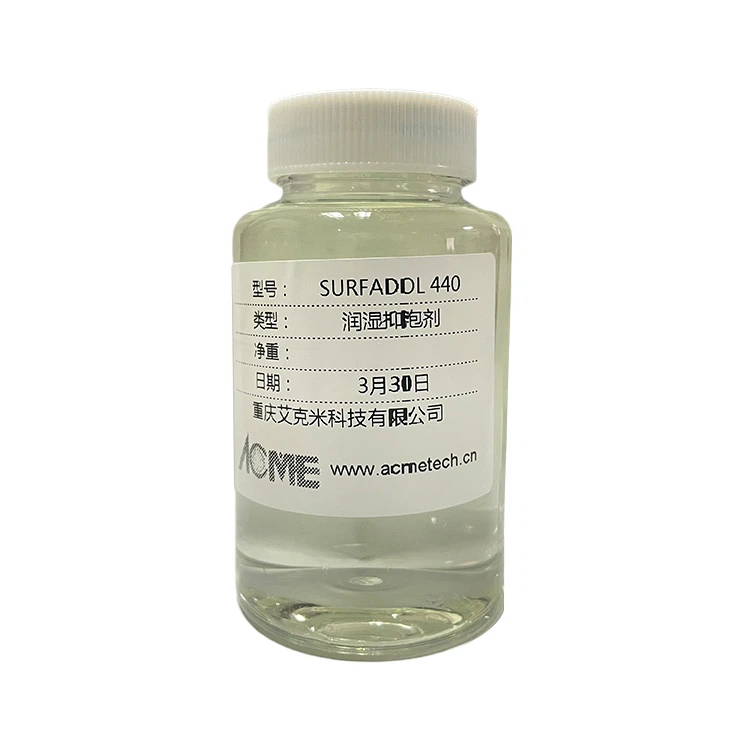
Our Low Foam Nonionic Wetting Agent is ideal for food processes where foaming is a concern. It provides efficient emulsification without excessive foaming, which is crucial in some high - shear mixing operations.
Conclusion
Emulsifying wetting agents are essential for improving the emulsification of vegetable oils in food products. They work by reducing interfacial tension, preventing droplet coalescence, and providing stability to the emulsion. The choice of the right agent depends on various factors such as the type of food product, pH, temperature, and desired properties. As a supplier, we are committed to providing high - quality emulsifying wetting agents that meet the strict requirements of the food industry. If you are interested in learning more about our products or discussing your specific emulsification needs, we invite you to contact us for a procurement discussion.
References
- McClements, D. J. (2015). Food Emulsions: Principles, Practice, and Techniques (2nd ed.). CRC Press.
- Friberg, S. E., Larsson, K., & Sjoblom, J. (2004). Food Emulsions and Foams: Interfacial Phenomena and Applications. Marcel Dekker.
- Becher, P. (1965). Emulsions: Theory and Practice. Reinhold Publishing Corporation.