

How do leveling agents function as additives for inkjet inks?
Oct 10, 2025
In the dynamic world of inkjet printing, the quality and performance of inks are paramount. Leveling agents, as crucial additives for inkjet inks, play a significant role in enhancing the printing results. As a leading supplier of additives for inkjet inks, I am excited to delve into how leveling agents function and their importance in the inkjet printing process.
Understanding the Basics of Leveling Agents
Leveling agents are substances added to inkjet inks to improve the flow and spreading of the ink on the printing substrate. When ink is ejected from the printhead onto the substrate, it needs to form a smooth, uniform layer. Without proper leveling, the ink may dry unevenly, resulting in defects such as orange peel, pinholes, or streaks. Leveling agents work by reducing the surface tension of the ink, allowing it to spread more evenly and form a flat, smooth surface.
How Leveling Agents Function
Surface Tension Reduction
The primary mechanism by which leveling agents function is by reducing the surface tension of the ink. Surface tension is the force that causes the surface of a liquid to contract and form a spherical shape. In inkjet inks, high surface tension can prevent the ink from spreading evenly on the substrate, leading to poor leveling. Leveling agents contain surfactant molecules that have a hydrophilic (water - loving) head and a hydrophobic (water - hating) tail. When added to the ink, these surfactant molecules align at the ink - air interface, with the hydrophilic heads in the ink and the hydrophobic tails in the air. This alignment reduces the surface tension of the ink, allowing it to spread more easily on the substrate.
Compatibility with Other Components
Another important aspect of leveling agents is their compatibility with other components in the inkjet ink. Inkjet inks are complex formulations that typically contain pigments, solvents, binders, and other additives. Leveling agents need to be compatible with these components to ensure that they do not cause any adverse effects such as flocculation, precipitation, or changes in viscosity. As a supplier of additives for inkjet inks, we carefully select and formulate our leveling agents to ensure optimal compatibility with a wide range of inkjet ink formulations.
Controlling Evaporation and Drying
Leveling agents can also play a role in controlling the evaporation and drying of the inkjet ink. During the printing process, the ink needs to dry quickly enough to prevent smudging but slowly enough to allow for proper leveling. Some leveling agents can slow down the evaporation rate of the ink, giving it more time to spread and level on the substrate. This can be particularly important for high - speed inkjet printing applications where the ink needs to dry rapidly but still maintain good leveling properties.
Benefits of Using Leveling Agents in Inkjet Inks
Improved Print Quality
The most obvious benefit of using leveling agents in inkjet inks is improved print quality. By ensuring that the ink spreads evenly on the substrate, leveling agents can eliminate defects such as orange peel, pinholes, and streaks, resulting in a smooth, uniform print surface. This is especially important for applications where high - quality printing is required, such as graphic arts, photography, and packaging.
Enhanced Adhesion
Leveling agents can also improve the adhesion of the inkjet ink to the substrate. When the ink spreads evenly on the substrate, it can form a better bond with the surface, reducing the risk of the ink peeling or flaking off. This is particularly important for printing on non - porous substrates such as plastics, metals, and glass.
Increased Productivity
In addition to improving print quality and adhesion, leveling agents can also increase productivity in the inkjet printing process. By reducing the occurrence of printing defects, leveling agents can reduce the need for reprints, saving time and resources. This can be particularly beneficial for high - volume printing applications where efficiency is key.
Our Range of Leveling Agents and Related Products
As a supplier of additives for inkjet inks, we offer a wide range of leveling agents that are specifically designed to meet the needs of different inkjet printing applications. Our leveling agents are formulated using the latest technology and high - quality raw materials to ensure optimal performance and compatibility.
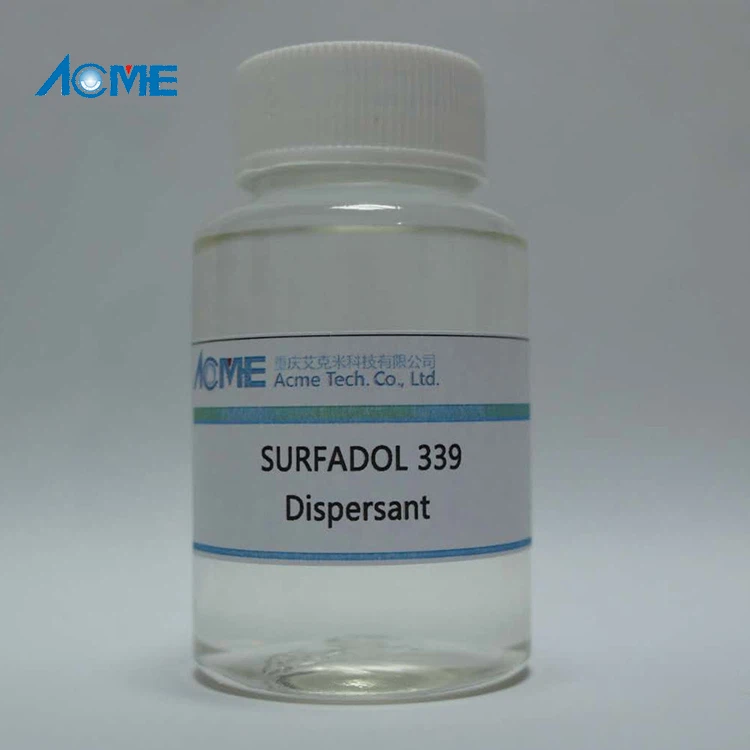

In addition to leveling agents, we also offer other additives for inkjet inks, such as Water-based Adhesive Defoamer, Inkjet Printing Additive, and Superior Surfactants for Inkjet Inks. These additives can work together with our leveling agents to further enhance the performance and quality of inkjet inks.
Case Studies
To illustrate the effectiveness of our leveling agents, let's look at a few case studies. A graphic arts company was experiencing problems with orange peel and streaks in their inkjet prints. After using our leveling agent, the print quality improved significantly, with a smooth, uniform print surface and no visible defects. The company was able to increase their productivity by reducing the number of reprints and improve customer satisfaction.
Another case involved a packaging manufacturer that was printing on plastic substrates. The ink was not adhering well to the substrate, resulting in peeling and flaking. By using our leveling agent, the adhesion of the ink improved, and the prints were more durable and long - lasting.
Contact Us for Procurement and Consultation
If you are looking for high - quality leveling agents or other additives for your inkjet inks, we invite you to contact us. Our team of experts is ready to assist you in selecting the right additives for your specific needs and provide you with technical support and advice. Whether you are a small - scale printer or a large - scale manufacturer, we can offer you customized solutions to improve the performance and quality of your inkjet printing.
References
- Zosel, A. (1980). Surfactants in inkjet inks. Tenside - Surfactants - Detergents, 17(6), 280 - 286.
- Leach, R. H., & Pierce, R. J. (2012). The printing ink manual. Spon Press.
- Shenoy, A. V., & Leal, L. G. (1992). Surfactant - driven Marangoni effects in thin liquid films. Annual Review of Fluid Mechanics, 24(1), 353 - 399.