

How do non - ionic wetting agents affect the rheological properties of solutions?
Sep 11, 2025
As a supplier of non-ionic wetting agents, I've witnessed firsthand the profound impact these substances can have on the rheological properties of solutions. Rheology, the study of the flow and deformation of matter, is crucial in various industries, from coatings and adhesives to pharmaceuticals and food processing. Understanding how non-ionic wetting agents interact with solutions at a rheological level can unlock new possibilities for product development and performance enhancement.
Understanding Non-Ionic Wetting Agents
Non-ionic wetting agents are surfactants that do not carry an electrical charge in solution. This characteristic sets them apart from ionic surfactants, which can be either positively (cationic) or negatively (anionic) charged. The absence of a charge makes non-ionic wetting agents less likely to interact with other charged species in solution, such as salts or polymers, which can be advantageous in many applications.
One of the primary functions of non-ionic wetting agents is to reduce the surface tension of a liquid. Surface tension is the force that causes the surface of a liquid to contract, resulting in phenomena like droplets forming and liquids beading up on a surface. By reducing surface tension, non-ionic wetting agents allow liquids to spread more easily, improving wetting and coverage. This property is particularly important in applications such as coatings, where good wetting ensures uniform film formation and adhesion.
Impact on Viscosity
Viscosity is a measure of a fluid's resistance to flow. It plays a critical role in many industrial processes, as it affects the ease of handling, mixing, and application of solutions. Non-ionic wetting agents can have a significant impact on the viscosity of solutions, and the nature of this impact depends on several factors, including the concentration of the wetting agent, the type of solvent, and the presence of other additives.
In some cases, non-ionic wetting agents can cause a decrease in viscosity. This is often due to the disruption of intermolecular forces within the solution. For example, in a polymer solution, the wetting agent can adsorb onto the polymer chains, reducing their entanglement and allowing them to move more freely. This results in a more fluid solution with lower viscosity. This effect can be beneficial in applications where low viscosity is desired, such as in spray coatings or inks, where it improves atomization and flowability.
On the other hand, at higher concentrations or under certain conditions, non-ionic wetting agents can cause an increase in viscosity. This can occur when the wetting agent molecules form aggregates or micelles in solution. These aggregates can interact with each other and with other components in the solution, creating a more structured network that resists flow. In some cases, this increase in viscosity can be used to thicken solutions, which can be useful in applications such as adhesives or thickeners.
Effect on Shear Thinning and Thixotropy
Shear thinning is a phenomenon where the viscosity of a fluid decreases with increasing shear rate. This property is common in many industrial fluids, such as paints and coatings, and it is desirable because it allows the fluid to flow easily during application (high shear rate) but then maintain its shape and resist sagging after application (low shear rate). Non-ionic wetting agents can influence the shear thinning behavior of solutions.
By reducing the intermolecular forces in the solution, non-ionic wetting agents can enhance the shear thinning effect. This is because at higher shear rates, the wetting agent molecules can more easily disrupt the structure of the solution, allowing it to flow more freely. As a result, the solution becomes less viscous at high shear rates, which is beneficial for applications such as spraying or brushing.
Thixotropy is another important rheological property that is related to shear thinning. Thixotropic fluids exhibit a time-dependent decrease in viscosity under shear, followed by a gradual recovery of viscosity when the shear is removed. Non-ionic wetting agents can also affect thixotropy. They can promote the formation of a weak, reversible structure in the solution, which breaks down under shear and reforms over time. This property can be useful in applications where the fluid needs to be easily applied but then maintain its shape, such as in putties or pastes.
Impact on Yield Stress
Yield stress is the minimum amount of stress that must be applied to a fluid to make it flow. It is an important property in applications where the fluid needs to maintain its shape under its own weight, such as in vertical coatings or inks. Non-ionic wetting agents can influence the yield stress of solutions.
In some cases, non-ionic wetting agents can reduce the yield stress of a solution. This is because they can disrupt the internal structure of the solution, making it easier for the fluid to start flowing. This can be beneficial in applications where easy flow initiation is required, such as in pumpable solutions or inks.
However, in other cases, non-ionic wetting agents can increase the yield stress. This can occur when the wetting agent molecules form a network or structure within the solution that resists deformation. This can be useful in applications where the fluid needs to maintain its shape, such as in gels or thickened solutions.
Practical Applications
The impact of non-ionic wetting agents on the rheological properties of solutions has numerous practical applications across various industries.
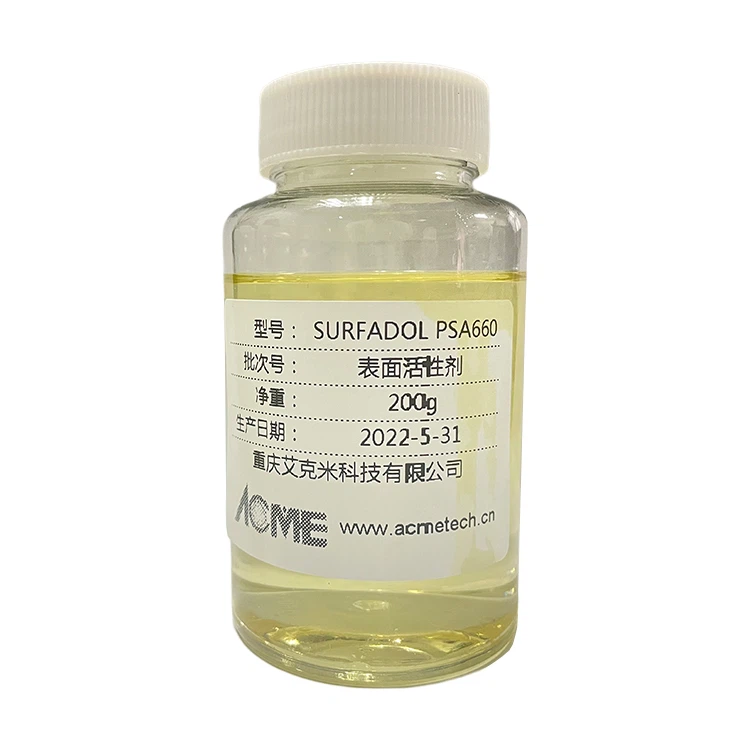

In the coatings industry, non-ionic wetting agents are used to improve wetting, flow, and leveling of coatings. By reducing surface tension and adjusting viscosity, they ensure uniform film formation and prevent defects such as orange peel and cratering. For example, SURFADOL 420 WETTING AGENT is a high-performance non-ionic wetting agent that can significantly enhance the rheological properties of water-based coatings, resulting in better application and performance.
In the adhesives industry, non-ionic wetting agents can improve the wetting and adhesion of adhesives to substrates. They can also adjust the viscosity of adhesives, making them easier to apply and ensuring good bonding strength. Low Foam Wetting Agent is a suitable choice for adhesive formulations, as it provides excellent wetting properties without generating excessive foam, which can interfere with the bonding process.
In the pharmaceutical industry, non-ionic wetting agents are used in formulations such as suspensions and emulsions. They can improve the stability and rheological properties of these formulations, ensuring uniform distribution of the active ingredients and easy administration. Nonionic Surfactant With Good Water Solubility is a popular option for pharmaceutical applications, as it can dissolve easily in water and provide effective wetting and stabilization.
Conclusion
Non-ionic wetting agents play a crucial role in influencing the rheological properties of solutions. Their ability to reduce surface tension, adjust viscosity, and affect shear thinning, thixotropy, and yield stress makes them valuable additives in a wide range of industries. By carefully selecting the appropriate non-ionic wetting agent and controlling its concentration, manufacturers can optimize the rheological properties of their solutions, leading to improved product performance and process efficiency.
If you are interested in exploring the benefits of non-ionic wetting agents for your specific application, we invite you to contact us for a detailed discussion. Our team of experts can provide you with in-depth technical support and help you find the most suitable wetting agent for your needs.
References
- Rosen, M. J., & Kunjappu, J. T. (2012). Surfactants and Interfacial Phenomena. John Wiley & Sons.
- Tadros, T. F. (2013). Rheology of dispersions: Principles, measurement, and applications. Wiley.
- Bird, R. B., Armstrong, R. C., & Hassager, O. (1987). Dynamics of polymeric liquids: Volume 1, Fluid mechanics. John Wiley & Sons.