

How does Super Wetting Surfactant affect the foamability of solutions?
Dec 01, 2025
Yo, folks! As a supplier of Super Wetting Surfactant, I've seen a lot of questions about how this amazing product affects the foamability of solutions. So, I thought I'd take a few minutes to break it down for you.
First off, let's talk about what Super Wetting Surfactant is. It's a type of surfactant that's designed to reduce the surface tension of a liquid, allowing it to spread out more easily and wet surfaces more effectively. This makes it really useful in a whole bunch of applications, from cleaning products to agricultural sprays. You can learn more about it here: Super Wetting Surfactant.
Now, onto the main question: how does it affect foamability? Well, it all comes down to the properties of the surfactant itself. Surfactants are made up of two parts: a hydrophilic (water-loving) head and a hydrophobic (water-hating) tail. When you add a surfactant to a solution, the hydrophilic heads are attracted to the water molecules, while the hydrophobic tails try to get away from the water and move towards the air or any other non - water surface.
In the case of foamability, the formation of foam depends on the ability of the surfactant to form a stable film at the air - liquid interface. When air is introduced into a solution containing a surfactant, the surfactant molecules arrange themselves at the surface of the bubbles, with the hydrophilic heads in the water and the hydrophobic tails in the air. This creates a sort of protective layer around the bubbles, preventing them from popping too quickly.
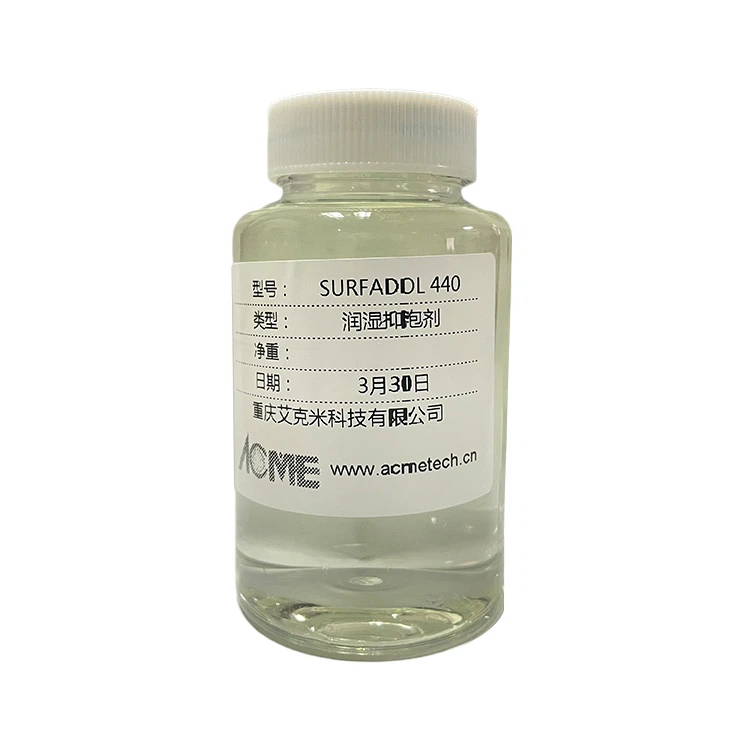

Super Wetting Surfactants can have different effects on foamability depending on their chemical structure. Some Super Wetting Surfactants are formulated to be low - foaming. These are great for applications where you don't want a lot of foam, like in industrial cleaning processes or in some types of agricultural sprays. For example, a Low Foam Nonionic Wetting Agent is designed to reduce surface tension without creating excessive foam. This is because the chemical structure of these surfactants doesn't allow them to form very stable foam films. They might have shorter hydrophobic tails or a different arrangement of the hydrophilic and hydrophobic parts, which makes it harder for them to hold the bubbles together.
On the other hand, there are Super Wetting Surfactants that can enhance foamability. These are often used in products like shampoos, body washes, and dish - washing liquids, where a rich, creamy foam is desirable. These surfactants have a chemical structure that allows them to form strong, stable foam films. They usually have longer hydrophobic tails and a well - balanced hydrophilic - hydrophobic ratio, which helps them to surround the air bubbles and keep them from collapsing.
Another factor that affects how Super Wetting Surfactant impacts foamability is the concentration of the surfactant in the solution. Generally, at low concentrations, the surfactant might not be able to form enough of a film at the air - liquid interface to create a lot of foam. As the concentration increases, more surfactant molecules are available to form the protective layer around the bubbles, and the foamability usually increases. However, there's a point of diminishing returns. If you add too much surfactant, the solution can become too viscous, and the foam might start to break down more easily.
The pH of the solution also plays a role. Different Super Wetting Surfactants have different optimal pH ranges for foam formation. For example, some surfactants work better in acidic solutions, while others are more effective in alkaline solutions. If the pH is outside of the optimal range, the surfactant might not be able to form a stable foam film, and the foamability will be reduced.
Temperature is yet another factor. In general, higher temperatures can increase the kinetic energy of the molecules in the solution. This can make it easier for the surfactant molecules to move around and form the foam film, but it can also cause the bubbles to break down more quickly. So, there's an ideal temperature range for each Super Wetting Surfactant where the foamability is at its best.
Now, let's talk about some real - world applications. In the cleaning industry, the right Super Wetting Surfactant can make a huge difference. For example, in a floor cleaner, a low - foaming Super Wetting Surfactant can be used to quickly wet the floor surface and remove dirt and grime without leaving a lot of foam behind. This is important because excessive foam can be difficult to clean up and might leave streaks on the floor.
In the agricultural sector, Super Wetting Surfactants are used in pesticides and fertilizers. A Water Soluble Wetting Agent can help the spray solution to spread evenly on the leaves of plants. If the surfactant is low - foaming, it won't create a lot of foam during the spraying process, which can be a nuisance and might also affect the accuracy of the application.
If you're in the business of formulating products that require specific foamability characteristics, choosing the right Super Wetting Surfactant is crucial. You need to consider factors like the type of product you're making, the desired level of foam, the pH and temperature of the solution, and the cost - effectiveness of the surfactant.
As a supplier of Super Wetting Surfactant, I've got a wide range of products to meet different needs. Whether you need a low - foaming surfactant for an industrial application or a high - foaming one for a consumer product, we can help you find the right solution. If you're interested in learning more about our Super Wetting Surfactants or want to discuss your specific requirements, don't hesitate to get in touch. We're here to assist you in making the best choice for your product formulation.
References
- Rosen, M. J., & Kunjappu, J. T. (2012). Surfactants and Interfacial Phenomena. John Wiley & Sons.
- Myers, D. (1992). Surfactant Science and Technology. VCH Publishers.