

What is the effect of defoaming wetting agents on the gloss of coatings?
Nov 12, 2025
Hey there! As a supplier of defoaming wetting agents, I've seen firsthand how these little wonders can make a huge difference in the world of coatings. Today, I'm gonna dive into the nitty - gritty of what effect defoaming wetting agents have on the gloss of coatings.
Let's start with the basics. Coatings are used for a variety of reasons, from protecting surfaces to enhancing their appearance. Gloss is one of the key visual properties that many people look for in a coating. A high - gloss finish can give a surface a sleek, modern look, while a low - gloss finish can provide a more matte, subdued aesthetic.
So, where do defoaming wetting agents come into play? Well, these agents are designed to do two main things: reduce foam and improve wetting. Foam can be a real pain in the neck during the coating process. It can cause all sorts of problems, like uneven application, air bubbles in the coating, and a rough, unprofessional finish. By reducing foam, defoaming agents ensure that the coating goes on smoothly and evenly.
On the other hand, wetting is all about how well the coating spreads and adheres to the surface. A good wetting agent helps the coating to cover the surface more uniformly, filling in any tiny gaps or pores. This is crucial for achieving a consistent gloss across the entire coated area.
Now, let's talk about how these functions impact the gloss of coatings. When it comes to foam reduction, less foam means fewer surface imperfections. Air bubbles trapped in the coating can create small craters or bumps, which scatter light and reduce the overall gloss. By eliminating these bubbles, defoaming agents allow the coating to dry with a smoother surface. A smooth surface reflects light more uniformly, resulting in a higher - gloss finish.
In terms of wetting, better wetting leads to a more even coating thickness. If the coating doesn't spread well, you might end up with thin and thick spots. The thin spots will have a different refractive index compared to the thick spots, which can cause light to scatter in different directions. This scattering reduces the gloss and gives the coating a patchy appearance. A wetting agent ensures that the coating has a consistent thickness, so light reflects off the surface in a more organized way, enhancing the gloss.
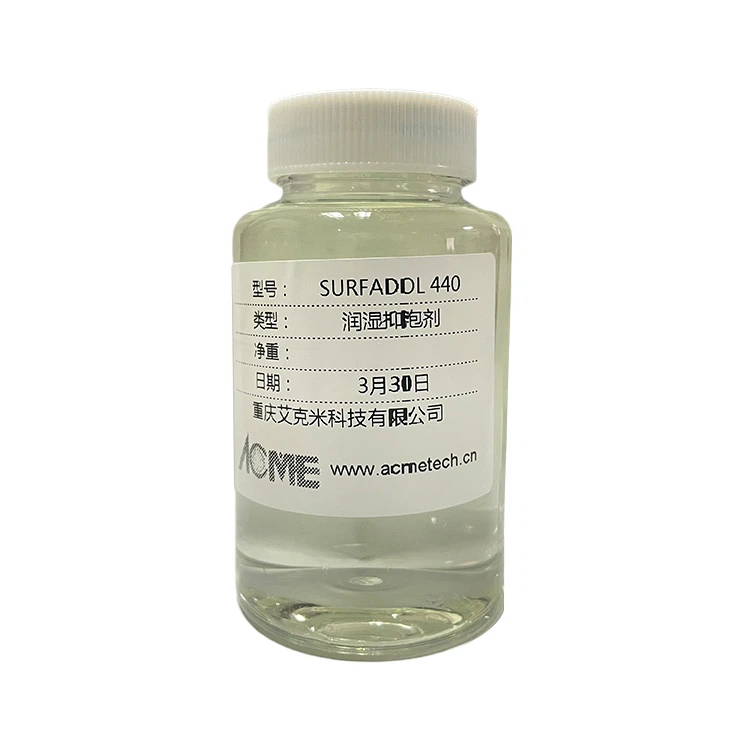
There are different types of defoaming wetting agents available, and each can have a slightly different effect on the gloss of coatings. For example, the SURFADOL 420 WETTING AGENT is a great option for many coating applications. It's formulated to provide excellent foam control and wetting properties. This agent helps to create a smooth, high - gloss finish by minimizing foam and ensuring even spreading of the coating.
Another type is the Low Foam Nonionic Wetting Agent. Nonionic wetting agents are often preferred in certain coating systems because they are less likely to react with other components in the coating. This stability can lead to a more consistent gloss. They work by reducing surface tension, which allows the coating to flow more easily and cover the surface better.
The Low - foam Wetting Agent for Fountain Solutions is specifically designed for applications where foam can be a major issue, like in fountain solutions used in printing. In coating applications, it can also be very effective at reducing foam and improving wetting. By keeping the foam in check, it helps to maintain a high - quality, glossy finish.

However, it's important to note that using too much of a defoaming wetting agent can have a negative impact on the gloss. Over - dosing can cause the agent to migrate to the surface of the coating, creating a hazy or dull appearance. It can also affect the curing process of the coating, leading to a less - than - perfect finish. So, it's all about finding the right balance.
To determine the optimal amount of defoaming wetting agent for your coating, you need to consider several factors. The type of coating you're using, the surface you're applying it to, and the application method all play a role. For example, if you're using a high - viscosity coating, you might need a different amount of agent compared to a low - viscosity one. Similarly, a porous surface might require more wetting agent to ensure good coverage.
In addition to the amount, the compatibility of the defoaming wetting agent with other components in the coating is also crucial. Some agents might react with pigments, resins, or solvents in the coating, which can affect the gloss and other properties. It's always a good idea to do some small - scale tests before applying the coating on a large surface.
In conclusion, defoaming wetting agents can have a significant impact on the gloss of coatings. By reducing foam and improving wetting, they help to create a smooth, even, and high - gloss finish. But it's essential to use the right type and amount of agent, and to ensure compatibility with the coating system.
If you're in the market for defoaming wetting agents and want to take your coating projects to the next level, we're here to help. We have a wide range of products that can meet your specific needs. Whether you're looking for a high - performance agent for industrial coatings or a specialized one for a particular application, we've got you covered. Get in touch with us to discuss your requirements and start achieving that perfect gloss for your coatings.
References
- "Coating Technology Handbook"
- "Surface Chemistry in Coating Applications"
- Industry research reports on defoaming and wetting agents in coatings