

ACME:Your Professional Additives for Printing Inks Manufacturer!
Founded by Mr. John Sun in September 2004, Chongqing ACME Tech. Co., Ltd. (ACME) has been focusing on R&D, production and sales of acetylenic diols based additives.
At ACME, we enable manufacturers to convert solvent-borne systems to waterborne formulations that meet demanding industry regulations. We offer a growing line of APEO-free, low-VOC additives that meet the most challenging sustainability and performance requirements facing the industry today.
-

Additives and Resins for Packaging Inks
Surfadol 440 surfactant is an low-foam wetting agent,It can improves wetting of various substrates and lower surface tension.It can application in industrial coatings,wood coatings,automotive
Add to Inquiry -
Additives for Solvent Based Inks
Surfadol 420 is a ink additives.Provides performance similar to Surfadol 541 with improved handling characteristics in waterborne coatings, inks, and adhesives systems. Solvent and APE-free.
Add to Inquiry -
Surfadol 440 is A nonfoaming, nonionic surfactant that is employed for substrate wetting.It can be used for Plastisol ink additives
Add to Inquiry -
Low Cure Additive for Plastisol Ink
SURFADOL 465 is a nonionic, low-foaming surfactant that is utilized for its wetting and slight emulsification properties. 465 has a high cloud point for utilization in high temperature systems. The
Add to Inquiry -
Surfadol 485 is a nonionic surfactant that functions as a wetting agent. Surfadol 485 also has slight emulsification properties, Surfadol485 complies with certain FDA regulations.. Surfadol 485 is a
Add to Inquiry


Why Choose Us
Rich Product Range
We mainly produce wood coating additives, anti-mildew coating additives, wood coating additives, paints containing antibacterial additives, wood and furniture coating additives, industrial wood coating additives and so on.
Wide Range Of Uses
The products produced by our company can be widely used in the coating industry, paint and coating applications, paper and pulp industry, detergent and cleaning agent manufacturing, food processing, pharmaceutical industry and chemical production.
Quality Guaranteed
The products produced by our company have obtained ISO 9001, ISO 14001 and ISO 45001 certificates; REACH certificate, and all our products have been sold to more than 50 countries and regions.
Leading Service
We have many years of industry experience and a complete production management, quality supervision, sales service operation system. Whether you want to buy wood coating additives or industrial coating additives, just send your requirements via email and we can customize the product for you. We also accept OEM customization.
Typical Properties
|
Appearance |
White to yellow paste |
|
Active matter content |
100% |
|
Cloud Point (5% solution, water:BC=2:1 ) |
>100℃ |
|
Solubility in water |
Soluble |
|
Density at 20°C, g/cm3 |
1.065-1.070 |
|
Viscosity at 20°C, cps |
<350 |
|
HLB |
17 |
Advantages of Additives for Printing Inks


Improved Print Quality
Printing ink additives contribute significantly to the overall quality of the printed product. For example, dispersing agents are commonly used to ensure that pigments or dyes are evenly distributed throughout the ink. This results in smooth and consistent colors, improving color vibrancy and reducing issues like pigment clumping or uneven coverage.
Enhanced Drying Time
The drying speed of ink is a critical factor in the printing process, particularly in high-speed printing environments. Some ink additives, such as driers or accelerators, can significantly reduce the drying time of inks.
Increased Durability and Longevity
Printing ink additives can improve the durability of printed materials, making them more resistant to wear and tear over time. UV stabilizers, for example, protect prints from the harmful effects of ultraviolet light, which can cause fading or discoloration. Additionally, additives like anti-scratch agents can help improve the abrasion resistance of printed surfaces, making them ideal for products that undergo frequent handling.
Enhanced Adhesion to Substrates
One of the most important roles of printing ink additives is improving the adhesion of ink to various substrates. Whether printing on paper, plastic, metal, or fabric, the right additives can ensure that the ink sticks effectively to the surface without peeling or smudging.
Customization and Flexibility
Printing ink additives provide a level of flexibility and customization that allows printers to tailor the ink to specific needs. For instance, printers can adjust the gloss level by adding gloss agents or modify the ink’s texture by using thickeners. Furthermore, additives like fluorescent dyes or pearlescent agents allow for creative and eye-catching designs, making printed materials stand out with vibrant effects.
Improved Viscosity Control
Viscosity is a critical factor in the application of ink, especially in commercial printing machines. Additives such as rheology modifiers or thickeners can be added to control the flow and thickness of the ink, ensuring that it spreads uniformly and works smoothly in printing machines.
Environmental Benefits
The use of eco-friendly ink additives is becoming increasingly popular as the printing industry seeks to reduce its environmental footprint. Some additives help reduce the amount of volatile organic compounds (VOCs) emitted by ink, contributing to safer and cleaner air quality.
Cost Efficiency
Printing ink additives can help reduce overall printing costs by optimizing ink usage. By improving the flow properties and dispersibility of pigments, additives allow printers to use less ink while still achieving high-quality results. This reduces material costs and waste, ultimately improving the cost-effectiveness of the printing process. Furthermore, additives that enhance the drying speed can minimize downtime during production, leading to faster turnaround times and increased productivity.
Application of Additives for Printing Inks
Label printing
In self-adhesive label printing, where excellent adhesion and water resistance are required.
01
Packaging
In the printing of food and consumer product packaging, ensuring attractive and safe print quality.
02
Publishing industry
To print books, magazines, and newspapers, where drying speed is essential.
03
Textile printing
In textile and garment printing, improving the durability of designs.
04
Commercial printing
In posters, brochures, and other promotional materials, to achieve vibrant colors and fast drying.
05
Correct Use Of Additives For Printing Inks
Storage:
Airtight Containers: Store additives in their original, airtight containers or transfer them to clean, dry, and airtight jars.
Temperature Control: Avoid extreme temperatures and direct sunlight, as these can degrade the additives.
Labeling: Clearly label all containers with the additive name and date of storage.
Mixing:
One at a Time:
When adding additives to ink, introduce them one at a time to prevent clumping or unintended reactions.
Thorough Mixing:
Mix thoroughly after each addition using a stirring stick that reaches the bottom of the container to ensure uniform distribution.
Consider Viscosity:
If adding a thickener or other viscosity-altering additive, ensure the ink's viscosity is within the desired range for your printing process.
PH Monitoring:
For additives that affect ink pH, use a calibrated pH meter to maintain the optimal pH level.
Monitoring:
Viscosity Check:
Regularly check the ink's viscosity to ensure it remains within the required range. Adjust with appropriate thinners or additives as needed.
pH Stability:
Monitor the ink's pH level, especially when using additives that can alter it, to maintain optimal print performance.
Observe Properties:
Pay attention to other ink properties like drying time, adhesion, and color stability, and adjust additives accordingly.
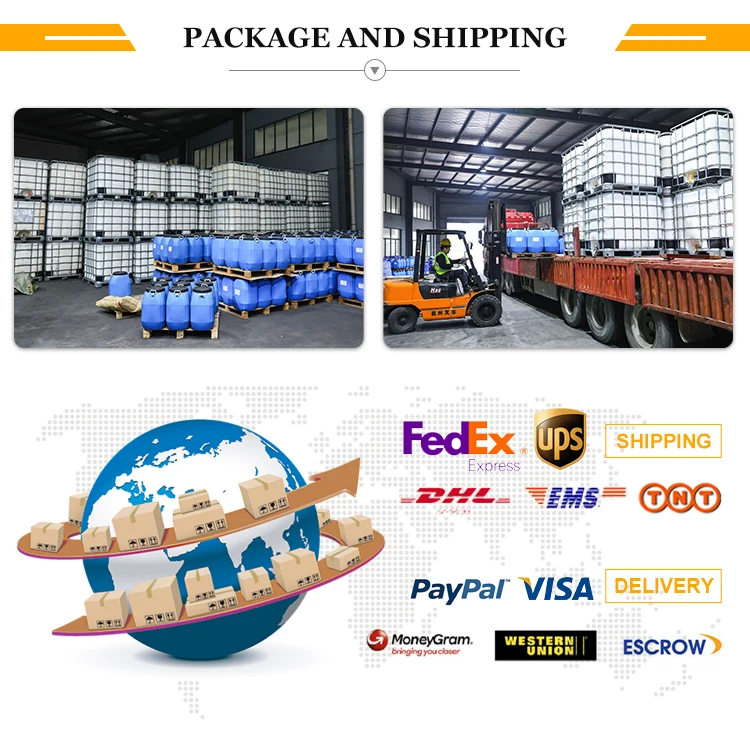
Packaging and Shipping
FAQ
As one of the most professional additives for printing inks manufacturers and suppliers in China, we're featured by quality products and good service. Please rest assured to buy additives for printing inks at competitive price from our factory. Contact us for free sample.
additives for concrete, additives for ceramics, additives for suspensions