

How do leveling additives affect the smoothness of the printed ink layer?
Aug 28, 2025
Hey there! As a supplier of Additives for Inkjet Inks, I've been getting a lot of questions lately about how leveling additives impact the smoothness of the printed ink layer. So, I thought I'd take a deep dive into this topic and share some insights with you.
First off, let's talk about what leveling additives are. Leveling additives are substances that are added to inkjet inks to improve the flow and spreading of the ink on the printing surface. When ink is applied to a substrate, it can sometimes form uneven surfaces, such as orange peel-like textures or streaks. These imperfections can affect the visual quality of the print and even the performance of the ink layer. Leveling additives work by reducing the surface tension of the ink, allowing it to spread more evenly and smoothly across the substrate.
One of the key ways that leveling additives affect the smoothness of the printed ink layer is by controlling the flow behavior of the ink. When ink is ejected from the printhead, it forms droplets that land on the substrate. These droplets need to merge and spread out to form a continuous and uniform ink layer. Leveling additives help to ensure that the droplets flow and merge properly, preventing the formation of gaps or uneven areas. They do this by reducing the viscosity of the ink and promoting its wetting and spreading properties.
Another important aspect is the surface tension of the ink. Surface tension is the force that causes the surface of a liquid to contract and form a spherical shape. In the context of inkjet printing, high surface tension can lead to poor wetting of the substrate and the formation of beading or pinholes in the ink layer. Leveling additives lower the surface tension of the ink, allowing it to wet the substrate more effectively and form a smooth, continuous film. This is especially important when printing on non - porous or low - energy surfaces, where wetting can be a challenge.
The evaporation rate of the ink also plays a role in the smoothness of the printed ink layer, and leveling additives can have an impact on this as well. If the ink dries too quickly, it may not have enough time to level out properly, resulting in a rough or uneven surface. On the other hand, if the ink dries too slowly, it can lead to issues such as smudging or bleeding. Leveling additives can help to optimize the evaporation rate of the ink, ensuring that it dries at a rate that allows for proper leveling and a smooth finish.
Now, let me introduce some of our great products. We offer a wide range of additives for inkjet inks, including Water-based Adhesive Defoamer. This defoamer is designed to eliminate foam in water - based inkjet inks, which can also contribute to a more even and smooth ink layer. Foam can cause disruptions in the ink flow and lead to uneven printing. Our water - based adhesive defoamer helps to ensure a bubble - free ink, resulting in a smoother print.
We also have Digital Inkjet Inks Additives for Industrial Printing. These additives are specifically formulated for industrial printing applications, where high - quality and smooth prints are essential. They offer excellent leveling properties, along with other benefits such as improved adhesion and durability.

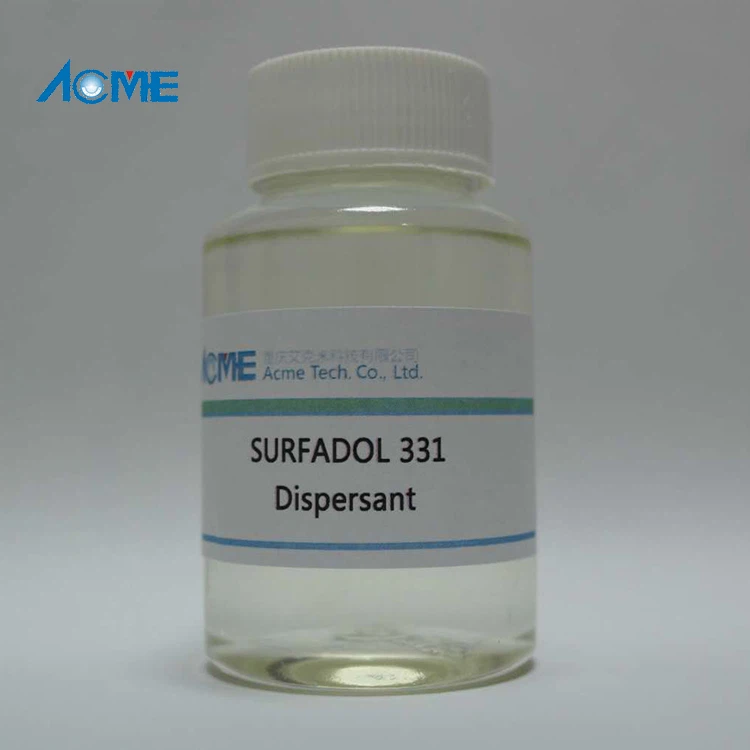
And don't forget about our Inkjet Printing Additive. This additive is a versatile solution that can enhance the overall performance of inkjet inks, including the smoothness of the printed ink layer. It is produced in our state - of - the - art factory, ensuring high - quality and consistent results.
When it comes to choosing the right leveling additive for your inkjet inks, there are several factors to consider. The type of substrate you are printing on is an important consideration. Different substrates have different surface energies and porosities, which can affect the wetting and leveling behavior of the ink. For example, printing on paper may require a different leveling additive than printing on plastic or metal.
The composition of the ink itself is also crucial. The resin system, solvents, and pigments in the ink can all interact with the leveling additive. You need to make sure that the additive is compatible with the other components of the ink to avoid issues such as phase separation or chemical reactions.
The printing conditions, such as the print speed, temperature, and humidity, can also impact the performance of the leveling additive. Higher print speeds may require additives that can work more quickly to ensure proper leveling, while extreme temperatures or humidity levels can affect the evaporation rate and flow behavior of the ink.
In addition to improving the smoothness of the printed ink layer, leveling additives can also provide other benefits. They can enhance the gloss and appearance of the print, making it look more professional and attractive. They can also improve the scratch resistance and abrasion resistance of the ink layer, which is important for applications where the print will be exposed to physical wear and tear.
So, if you're looking to improve the smoothness of your printed ink layers and take your inkjet printing to the next level, we've got the solutions for you. Our additives are carefully formulated and tested to ensure the best performance in a variety of printing applications. Whether you're in the packaging industry, the textile industry, or any other field that uses inkjet printing, we can help you achieve high - quality, smooth prints.
If you're interested in learning more about our leveling additives or other additives for inkjet inks, don't hesitate to get in touch with us. We're always happy to have a chat and discuss your specific needs. We can provide samples for you to test and offer technical support to ensure that you get the most out of our products. Let's work together to create amazing prints with smooth and beautiful ink layers.
References
- "Inkjet Printing Technology" by some well - known printing experts. This book provides in - depth knowledge about the principles and processes of inkjet printing, including the role of additives.
- Research papers from leading printing research institutions on the impact of additives on ink properties and print quality. These papers offer the latest scientific findings and insights into the field.